Dear Friends,
This weekend many Christians will observe Epiphany. Traditionally, Epiphany celebrates the visit of the wise men or magi. The gifts the wise men brought to Jesus included gold, representing his royal standing; frankincense, denoting his divine birth; and myrrh symbolizing his mortality.
“The word ‘Epiphany’ comes from Greek and means ‘manifestation’. It celebrates ‘the revelation of God in his Son as human in Jesus Christ’.”
After they had heard the king, they went on their way, and the star they had seen when it rose went ahead of them until it stopped over the place where the child was. When they saw the star, they were overjoyed. On coming to the house, they saw the child with his mother Mary, and they bowed down and worshiped him. Then they opened their treasures and presented him with gifts of gold, frankincense and myrrh. And having been warned in a dream not to go back to Herod, they returned to their country by another route.
When Herod realized that he had been outwitted by the Magi, he was furious, and he gave orders to kill all the boys in Bethlehem and its vicinity who were two years old and under, in accordance with the time he had learned from the Magi. Matthew 2:9-12, 16 (NIV)
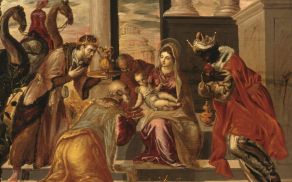
In our Christmas pageants we include the arrival of the “three kings” as part of our nativity scenes, but the story of the magi found in the 2nd chapter of Matthew may have taken place as much as two years after the birth of Jesus and includes the tragic episode of the “slaughtering of the innocents” by King Herod.
The first time I read the account in Matthew, I was taken aback by the seeming discrepancies between the story of the wise men presented in Christmas pageants and the biblical account of the magi. Upon reflection, it made sense that the various stories related to the birth of Jesus had been condensed in pageants to offer an overview of the joyful events surrounding Christ’s birth that would be both acceptable to children and understandable by all. That seems like a wonderful tradition.
A German theologian, Rupertus Meldenius, is credited with advancing the principle “In Essentials Unity, In Non-Essentials Liberty, In All Things Charity.”
In Essentials Unity: Sola Scriptura (Latin for Scripture alone) is a guiding principle when it comes to matters of doctrine. If ever questions arise about core beliefs, our final authority is found in Scripture alone.
“In Non-Essentials Liberty,” reminds us that we don’t have to be uptight about things that do not affect our core beliefs. The traditional manger scene serves to remind the world that God sent his son not as a king, but as a humble babe in a manger.
Whether the magi first encountered our Lord in a stable or in a house are interesting topics for discussion, but not something to be overly concerned about. Re-reading the story in Matthew can remind us that since we may not always know the finer points, our best option is always to check the Scriptures.
“In All Things Charity” can serve to direct us to Jesus words, “Do to others as you would have them do to you.” Luke 6:31 (NIV) Share the Good News in a way that is kind and respectful.
The Magi brought gifts. This Epiphany we might want to consider offering God the gift of our love for one another: Keep on loving one another as brothers and sisters. Hebrews 13:1a
Blessings,
Your Brother and Sister in Christ
 Because He Loves Us Press