Dear Friends,
“Love is patient, love is kind. It does not envy, it does not boast, it is not proud. It does not dishonor others, it is not self-seeking, it is not easily angered, it keeps no record of wrongs. Love does not delight in evil but rejoices with the truth. It always protects, always trusts, always hopes, always perseveres.” 1 Corinthians 13:4-7 (NIV)
First Corinthians 13 is frequently read at weddings, so no one was surprised when Anthony and Daven chose the above verses as part of their ceremony. However, many in the congregation were astonished when the friend they chosen to read the verse inadvertently turned instead to Romans 13 and read the following:
“For the one in authority is God’s servant for your good. But if you do wrong, be afraid, for rulers do not bear the sword for no reason. They are God’s servants, agents of wrath to bring punishment on the wrongdoer. Therefore, it is necessary to submit to the authorities, not only because of possible punishment but also as a matter of conscience.
This is also why you pay taxes, for the authorities are God’s servants, who give their full time to governing. Give to everyone what you owe them: If you owe taxes, pay taxes; if revenue, then revenue; if respect, then respect; if honor, then honor.” Romans 13:4-7
Daven and Anthony have been happily married for twenty years … and neither has had any problems with the IRS. As for those that attended the wedding, they probably wouldn’t have taken notice had the young friend read from First Corinthians, as planned. But few, if any, have forgotten the look on Daven’s face as their friend read the unexpected verses from Romans.
Another Scripture that is read at weddings is from Ecclesiastes:
“Though one may be overpowered, two can defend themselves. A cord of three strands is not easily broken.” Ecclesiastes 4:12
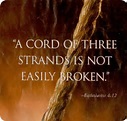
I once heard a pastor explain that this verse describes a true covenant relationship. The “two” are the man and wife who are being joined in holy matrimony. The third cord — the most important cord — is God.
When Bonnie and I were married, we modified a prayer found in the Book of Common Prayer to form what we call our covenant prayer. With Ecclesiastes 4:12 in mind, we made the commitment to share this prayer with each other every morning. Since the prayer includes prayers for friends and family, we change the words each day to recognize the special needs of those we care about.
Does this daily practice mean we live up to the standard set in 1 Corinthians 13? Hardly! Does it mean that we each strive to be as strong a strand as possible in the three-strand cord described in Ecclesiastes? Absolutely!
Besides our morning prayer, we have adopted one other practice that we think can help any couple reach that “happily ever after” we all desire. In those times when we get cranky — and we both have times when we get cranky — we offer each other a “twenty-four-hour pass.” This pass is our way of following another Scripture:
“Make allowance for each other’s faults, and forgive anyone who offends you. Remember, the Lord forgave you, so you must forgive others.”
Colossians 3:13 (NLT)
Bonnie and I are practically newlyweds, having just celebrated our sixth anniversary, but we frequently interact with couples who have been married forty, fifty, even sixty years. Those who seem the most content are the ones who have put the Lord at the center of their lives.
Verse for the Week: “Satisfy us each morning with your unfailing love, so we may sing for joy to the end of our lives.” Psalm 90:14
Blessings, Your Friends in Christ
 Because He Loves Us Press