It’s Hard to be a Christian

Dear Friends,

When I was a kid nobody died. Every Saturday, I would go to the Beverly Theater in Northeast Washington, D.C. where my heroes would fight valiantly against the forces of evil, only to be caught in a life-threatening dilemma at the end of the serial. No matter how hopeless their situation seemed, I could go home confident that the next Saturday they would be rescued and resume the fight. That was an age of innocence.

I’m not sure when innocence died. It may have been when John F. Kennedy was assassinated. Perhaps it was dealt a fatal blow by the horrible videos that became part of the nightly news during the Vietnam War. I’m not sure when, but I just know that, for me, innocence died; and the steady stream of violence that permeates this generation’s nightly newscasts, video games, movies, and crime dramas does a good job of making sure that no one can pull the nails from innocence’s coffin.

Like the Psalmist, we want to cry out, “Bring to an end the violence of the wicked and make the righteous secure— you, the righteous God who probes minds and hearts. Psalm 7:9 (NIV)

But then we have to ask, “Who is righteous?” When I probe my own mind and heart, I realize that a by-product of the death of innocence is the birth of the sentiment called “schadenfreude” – pleasure derived from the misfortunes of others.

This feeling is not new to our generation. We read in the Book of Job, “The righteous will be happy to see the wicked destroyed, and the innocent will laugh in contempt. They will say, ‘See how our enemies have been destroyed. The last of them have been consumed in the fire.’”
Job 22:19:20 (NLT)


The problem is that more and more our definition of “enemy” has been broadened to include anyone who has a different opinion from our own. When we start taking delight in the misfortune of another child of God, we’ve crossed a line. Anyone who listens to cable news or talk radio knows what I’m talking about. Guilty as charged.

Perhaps we should make it a habit to heed the counsel of Psalm 37:7-9:  “Be still before the Lord  and wait patiently for him; do not fret when people succeed in their ways,     when they carry out their wicked schemes.”

Refrain from anger and turn from wrath;     do not fret—it leads only to evil. For those who are evil will be destroyed,     but those who hope in the Lord will inherit the land.

Controlling schadenfreude is not easy for me. I do cheer when I see a video of ISIS terrorists being killed in a drone strike, and it’s hard to hold back a fist pump when I see a corrupt politician get hoisted on their own petard.

hoisted

Reading Psalm 37 may not be enough. I need to remind myself of Jesus’ words in
Matthew 5:

You have heard that it was said, ‘Love your neighbor and hate your enemy.’ But I tell you, love your enemies and pray for those who persecute you, that you may be children of your Father in heaven. He causes his sun to rise on the evil and the good, and sends rain on the righteous and the unrighteous.”

Being a Christian sure isn’t easy!

Blessings,
Your Friends in Christ

Improve the World or Enjoy the World?

Dear Friends,

As a young man, I was an avid tennis player who had all the right equipment, all the right clothing, and a library of books full of tips on how to be a better player. One day I was walking through a bookstore when the book, “Improving Your Serve” by Charles R. Swindoll caught my eye. My serve was already decent, but if Chuck could help me — why not give it a try? I bought the book without reading the sub-title, “The Art of Unselfish Living.”

tennis-player

The first chapter —“Who, Me a Servant? You Gotta Be Kidding!” — hit me right where it hurt. I realized I had been spending much more time practicing my tennis serve than I ever spent practicing my Christianity by serving others. In 1st Peter 4:10 (NIV) we read, Each of you should use whatever gift you have received to serve others, as faithful stewards of God’s grace in its various forms.”

 It turned out I was much more gifted as a servant than I had ever been as a tennis player. I didn’t give up the sport; I just discovered a new love. Like Peter, who had denied Christ, I heard the words, “Feed my sheep,” and found myself working at a food bank. It was a blast! I was blessed far more than the people we served.

As I have moved into new areas of service, I try to follow the words in Ephesians 6:7-8:  “Serve wholeheartedly, as if you were serving the Lord, not people, because you know that the Lord will reward each one for whatever good they do ….”

E.B. White, the author of Charlotte’s Web, wrote, “I arise in the morning torn between a desire to improve the world and a desire to enjoy the world.”

 Why not both?

 We have different gifts, according to the grace given to each of us. If your gift is prophesying, then prophesy in accordance with your faith; if it is serving, then serve; if it is teaching, then teach; if it is to encourage, then give encouragement; if it is giving, then give generously; if it is to lead, do it diligently; if it is to show mercy, do it cheerfully.” Romans 12:6-8

Had I not found Chuck Swindoll’s book, I might never have discovered the joy that comes from serving others. I might have ended up like the hermit described in the poem below.

“The Hermit”

He spent his whole life looking up just waiting for the Lord
The only time his head looked down was when he searched the Word.
Imagine his discomfort, when Christ came and he found
That he had never learned to love; he’d never looked around.
He’d never helped a wounded friend; he’d never served the poor.
He’d never even noticed when they knocked upon his door.
He’d never dried another’s tears, nor cried tears of his own.
His solitary heartbeat was all he’d ever known.

But God’s a god of mercy, and God’s a god of grace
The hermit finally got his wish; he saw God face to face.
And in a gentle voice God said, “At last your Lord you’ve found,
But you’d have found me sooner had you learned to look around.
You can find me in a neighbor; you can find me in a friend.
You can find me in a last breath as another meets his end.
You can find me in a child kneeling down to say her prayers;
You can find me, and in finding, you can find the One who cares.

Blessings,

Your Friends in Christ

Spititual Fitness Plan: Prayer

Dear Friends,

Last week we looked at ways we can make reading the Bible the cornerstone of our “Spiritual Fitness Plan.” If we want to step closer to God, it simply makes sense to spend more time reading the Book that will help us keep from stumbling. “Those who love your instructions have great peace and do not stumble.” Psalm 119:165 (NLT)

The second building block in our Spiritual Fitness Plan is prayer. In Ephesians 6:18 the Apostle Paul tells the Ephesians, “Pray in the Spirit at all times and on every occasion. Stay alert and be persistent in your prayers for all believers everywhere.” In First Thessalonians 5:16-18 he proclaims, “Always be joyful. Never stop praying. Be thankful in all circumstances, for this is God’s will for you who belong to Christ Jesus.” Taking time to pray isn’t something we should do once in a while; it is something we need to do while we are doing everything else. Making daily prayer part of our Spiritual Fitness Plan can help us deal with our past, find guidance for our present, and build hope for the future.

There is a joke that would be funny if it weren’t so true: Q: How many psychiatrists does it take to screw in a light bulb? A: Who cares? They spend most of their time trying to figure out how to remove the old bulb.

image001

Rather than focusing on the path in front of us, we can become so preoccupied with the “would haves,” “could haves,” and “should haves” that we become blind to how far we have come. And we have come a long way — “Anyone who belongs to Christ has become a new person. The old life is gone; a new life has begun!”  If we let him, God will take out those “old light bulbs of our past” and give us the opportunity to shine for Him. Prayer can help us internalize this truth.

image002

We read in Philippians, “Don’t worry about anything; instead, pray about everything. Tell God what you need, and thank him for all he has done.” Do you need assurance that God loves you in spite of things you may have done … or things done to you? Take your concerns to God in prayer and trust his answers.

In her book Uninvited: Living Life When You Feel Less Than, Left Out, and Lonely, Lysa TerTeurst writes, “God’s love isn’t based on me; it’s placed on me.” Later she explains, “He waits every day with every answer we need, every comfort we crave, every affection we’re desperate for, while we look everywhere else but at Him … We run at a breakneck pace to try and achieve what God simply wants us to slow down enough to receive. Fully. Completely. Perfectly. In Him. With Him. By Him. We just have to turn to Him. And sit with Him. No matter what.”

Jesus spoke about the perfect Spiritual Fitness Plan in John 15:7 (ICB). “Remain in me and follow my teachings. If you do this, then you can ask for anything you want, and it will be given to you.”

Blessings,
Your Friends in Christ


Using Your Spiritual Fitbit®

Dear Friends:

Millions of Americans have joined the Fitbit® craze. Just in case you’re not into the latest tech-gadgets, let me explain what a Fitbit® is. A Fitbit® is a pendant-size or wristwatch-size device that monitors your physical activity and motivates you to do more. Fitbit® fans establish goals for the number of hours they sleep, the number of steps they take, and the number of calories they burn. It is not unusual to see a Fitbit® fan jogging in front of the television set, refusing to go to bed until they reach their 10,000 step goal. One “Fitbit® aficionado” we know even jokingly asked a friend to wear her Fitbit®, explaining that she was running behind her step goal and needed help catching up.

fitbit

I’m teasing about people who wear Fitbits. One of the essential elements in any fitness program is keeping track of your progress. In fact, the Apostle Paul probably would have owned a First Century “Fitus-Bitus” if such a device had been available. “I discipline my body like an athlete, training it to do what it should.” Paul’s words in 1 Corinthians 9:27a (NLT) “

Of course, the Apostle placed a much higher priority on measuring spiritual fitness. “Athletes are disciplined in their training. They do it to win a prize that will fade away, but we do it for an eternal prize. So I run with purpose in every step.” 1 Corinthians 9:25-26a.

How can we keep track of our spiritual fitness? Is there a metaphorical “Spiritual Fitbit®” we can rely on to help us measure the steps we take towards God each day? Actually there is; it’s our Bible. My Grandma Alice was a devoted Christian. I can’t count how many times I would visit and find her sitting in her lounge chair carefully reading her King James Version of the Bible. The pages were dog-eared, and so many passages were highlighted that you figured you might as well read the whole page. She took Psalm 119:105 seriously. “Thy word is a lamp unto my feet, and a light unto my path.” Grandma Alice’s Bible showed that her favorite exercise was spiritual jogging.

By contrast, we can be like the “fitbit® aficionado” referenced above who thought someone else could get her steps for her. Our “Spiritual Fitbit®” — our Bible — won’t do us any good unless we make it part of our daily routine. If our only exposure to the Word is on Sunday, our spiritual fitness program needs a tune-up.

Know your Coach: An indispensable first step in a spiritual tune-up is to make sure you have the right Fitness Coach —Jesus. “We are made right with God by placing our faith in Jesus Christ. And this is true for everyone who believes, no matter who we are.” Romans 3:22 (NLT)

Set your goals: Next we need to make sure we have set the right spiritual goals. King David wrote in 1 Chronicles 16:11, “Search for the Lord and for his strength; continually seek him.” In Psalm 25:4-5 he wrote, “Show me the right path, O Lord; point out the road for me to follow. Lead me by your truth and teach me, for you are the God who saves me. If we are going to seek Him, shouldn’t we rely on the one Book that will show us how to find Him?

Build a team: “Plans go wrong for lack of advice; many advisers bring success.” Proverbs 15:22.

Listen to advice and accept discipline, and at the end you will be counted among the wise. Proverbs 18:20 (NIV)

The above Scriptures remind us that a support team can help us move toward improved spiritual fitness. Joining a small group or participating in a Bible study can put you in contact with others who are taking important steps towards God.

Set aside time: In the first verse of Ecclesiastes we are reminded, “For everything there is a season, a time for every activity under heaven.”  It is also important to set aside specific times to work on our spiritual health. One couple we know has a period of devotions each morning and prayers of thanksgiving at bedtime. King David wrote, “It is good to give thanks to the Lord, to sing praises to the Most High. It is good to proclaim your unfailing love in the morning, your faithfulness in the evening.”

Add resources: When you’re ready to kick your spiritual workout into high gear, there is a plethora of resources you can tap into:

  1. Today most churches have sermon archives and/or small group studies on their websites.
  2. Christian Bookstores offer a wide variety of devotionals such as Oswald Chambers’ My Utmost for His Highest, Max Lucado’s Grace for the Moment, and Sarah Young’s Jesus Calling.
  3. Study Bibles, Reading Plans, and Commentaries can help you gain a deeper understanding of what you read in the Scriptures.
  4. If you have access to the internet, there are two free resources you may want to check out: https://www.blueletterbible.org/ and https://www.biblegateway.com.
  5. Our personal favorite resource is Biblegateway which allows us to search 54 different English translations of the Bible.
  6. There are audio versions of the Bible that you can play on your Iphone or Mp3 player as you work out.
  7. This Fall the Museum of the Bible is scheduled to open in Washington, D.C. https://www.museumofthebible.org/
  8. Perhaps you would like to share with others steps you are taking that bring you closer to God. We encourage you to leave a comment at www.becausewelovehim.wordpress.com.

Scripture for the Week: Psalm 37:23 “The Lord directs the steps of the godly. He delights in every detail of their lives.”

Blessings, Your Friends in Christ

Erasing the Etch-A-Sketch”

Dear Friends,

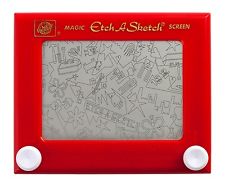
Do you remember the Etch-A-Sketch® we played with as children? You could scribble anything you wanted on them, and then with a shake of the tablet or a twist of the wheel erase what been had written and start again.

etch a sketch

Unfortunately it takes more than a shake or a twist to erase our negative thoughts. Memories of how we have been hurt by others, or thoughts of how we have intentionally or accidentally hurt others can leave deep emotional scars. How, we wonder, can we obtain a tabula rasa — a clear slate — a mind not troubled by old experiences, guilt, or pain?

Clearing the slate involves forgiveness. It starts with the words of Jesus in the Lord’s Prayer. “And forgive us our debts, as we also have forgiven our debtors.

I find enlightening the explanation of this Scripture in Matthew Henry’s Commentary: “This is not a plea of merit, but a plea of grace. Note, Those that come to God for the forgiveness of their sins against him, must make conscience [the inner sense of what is right or wrong in one’s conduct or motives, impelling one toward right action] forgiving those who have offended them.”

Sometimes we have been hurt so badly we cry, “Do you not know what THEY have done to me? Jesus responds, “Do you not know what I have done for you?”

“Make allowance for each other’s faults, and forgive anyone who offends you. Remember, the Lord forgave you, so you must forgive others.” Colossians 3:13 (NLT)

I don’t know about you, but I sometimes hang on to guilt from my own past wrongs like a dog fighting for a bone. I know that confession — telling God what he already knows about us — is a starting point in erasing negative thoughts. I also believe    1 John 1:9: “If we confess our sins, he (God) is faithful and just and will forgive us our sins and purify us from all unrighteousness.” Nevertheless, it can still be a challenge for me to forgive myself. Ever feel that way?

Digging for answers, I read Proverbs 28:13: “Whoever conceals their sins does not prosper, but the one who confesses and renounces them finds mercy.” My eyes stopped at the word “renounces.” What does it mean to renounce one’s sins? The Reformation Study Bible offers this explanation: “The orderliness and well-being in one’s life is linked to an intensely personal relationship with God. Unconfessed sin is the ultimate disorder in life. Confession and repentance lead to a restoration of a right relationship with God, based on mercy.”

We are told to confess and repent, with repentance being a commitment to feel and show that you are sorry for something bad or wrong that you did and that you sincerely want to do what is right. As the old saying goes, “If you want to show me you are sorry, don’t do it again!”

In 2 Corinthians 7:10, we are warned that there is a difference between true repentance and “wordly sorrow”. “Godly sorrow brings repentance that leads to salvation and leaves no regret, but worldly sorrow brings death.” With this in mind, it is important to make sure that our “repentance” is prompted by our grief over how we have offended God, not just remorse over the immediate consequences of our actions.

Recently I heard a pastor say that confessing your sins to someone you trust can help you to heal. That’s biblical. “Therefore confess your sins to each other and pray for each other so that you may be healed. The prayer of a righteous person is powerful and effective.” James 5:16. Of course, we should always choose our person to confide in with Proverbs 11:13 in mind: “A gossip betrays a confidence, but a trustworthy person keeps a secret.”

 In our confessing, we also need to avoid being like the thief who is compelled to return to the scene of the crime. If we repeatedly return to thoughts of a particular sin, it’s time to ask the Holy Spirit to help us forgive ourselves, and trust that God already has.

The Lord is compassionate and gracious, slow to anger, abounding in love. He will not always accuse, nor will he harbor his anger forever; he does not treat us as our sins deserve or repay us according to our iniquities. For as high as the heavens are above the earth, so great is his love for those who fear him; as far as the east is from the west, so far has he removed our transgressions from us.” Psalm 103:8-12

Blessings,
Your Friends in Christ