The Missing Piece

Dear Friends,

missing-piece-of-heart

Do you ever have times when you feel like something is missing from your life? Maybe it’s better health or wealth, or something or someone that you think will make you feel complete —a missing piece that stands between you and a heart at peace.

Speaking in John 14:27a (NIV), Jesus said, “Peace I leave with you; my peace I give you. I do not give to you as the world gives.” Jesus was telling his disciples that he was offering a blessing that went far beyond anything the world could offer.

How do we make the peace that Jesus offers an essential piece in this puzzle we call life? Try as we might, there are times when it’s hard to follow the Apostle Paul’s advice as paraphrased in the message Bible:

“Don’t fret or worry. Instead of worrying, pray. Let petitions and praises shape your worries into prayers, letting God know your concerns. Before you know it, a sense of God’s wholeness, everything coming together for good, will come and settle you down. It’s wonderful what happens when Christ displaces worry at the center of your life.” Philippians 4:6-7

Life happens, and when our petitions and praises don’t yield the outcome we desire, the last thing we want to hear is someone quoting Romans 8:28 (NIV): “And we know that in all things God works for the good of those who love him, who] have been called according to his purpose.”

How can we offer comfort to someone who feels that the peace Jesus offers is somehow slipping away? What can we say when their world is in pieces?

In Second Corinthians 1:3-4 we read, “Praise be to the God and Father of our Lord Jesus Christ, the Father of compassion and the God of all comfort, who comforts us in all our troubles, so that we can comfort those in any trouble with the comfort we ourselves receive from God.”

Sometimes the best way to offer comfort is to just listen. If we must speak, we can speak to God and let others listen in as we offer our prayers for them. We may not be able to supply the piece that is missing from their life, but with God’s help we can share the peace that we have known in the Lord.

“The deepest level of worship is praising God in spite of the pain, thanking God during the trials, trusting Him when we are tempted to lose hope, and loving Him when he seems so distant and far away. At my lowest, God is my hope. At my darkest, God is my light. At my weakest, God is my strength. At my saddest, God is my comforter.” — Author unknown

Verse for the Week: Ephesians 3:16-17 (NLT)
“
I pray that from his glorious, unlimited resources he will empower you with inner strength through his Spirit. Then Christ will make his home in your hearts as you trust in him. Your roots will grow down into God’s love and keep you strong.”

Blessings,
Your Friends in Christ

Are You Happy?

What is happiness?

happy-face_veer_3x4

If you’re happy and you know it, clap your hands. Clap, Clap.
If you’re happy and you know it, and you really want to show it,
If you’re happy and you know it, Clap your hands. Clap, Clap.

I wonder how many people are truly happy. Too often, we measure happiness based on where we are in relation to others. I may be perfectly happy driving my Saturn until my neighbor drives up in his BMW. You may be very comfortable living in a one bedroom apartment until a relative tells you about their new four bedroom house.

 Did our condition change? Or did our perception of our condition change? Unfortunately, as long as we measure happiness based on how we compare to others, we will never know consistent happiness. But, there is a happiness – a spiritual joy- that is available to those who have a right relationship with God. Solomon wrote about this in Ecclesiastes: “God gives wisdom, knowledge, and joy to those who please him.” Ecclesiastes 2:26

 So happiness comes when our lives are pleasing to God. But what makes lives that are pleasing to God?

If we turn to the “Beatitudes” — found in the fifth chapter of Matthew — we get a surprising look at the types of people whom Jesus says are made happy (blessed). The Beatitudes change the focus from what we must do, or what we must possess, to what we must become to find happiness.

The Beatitudes describes the process through which we open our hearts to the work of the Holy Spirit. We all start out as sinners. It’s only through the work of the Spirit that we can change our lives and find true happiness.

Jesus showed us the starting point for this process when he said, “Blessed are the poor in Spirit.” Being poor in spirit involves a surrender of our pride and our self-sufficiency. It involves recognizing that there is nothing we can do to earn a spot on God’s roster. It’s all about the gift of salvation that flows from God’s grace. “Blessed are the poor in spirit for theirs is the kingdom of heaven.”

Next Jesus said, “Blessed are those who mourn for they will be comforted.” Normally, when people read this verse they think of mourning, such as when a loved one dies. But Christian commentaries point us toward the sense of loss felt by someone who is so troubled by the sin they see in their personal life and in society that it actually grieves them.

There is an eternal difference between confessing sin and repenting of sin. The one who is truly repentant grieves over their sin. In this broken state, the Holy Spirit, the comforter, comes along side reminding them that there is forgiveness through Jesus Christ.

The next beatitude often causes men a problem: “Blessed are the meek for they will inherit the earth.” I have to admit – when I hear the word meek – the first thought that comes to my mind is that puny little cartoon mouse with the whiny voice.

But meek doesn’t mean weak. A better definition for meekness is “power under control.” When Jesus bore our sins on the cross, he could have called down thousands of angels to save him. But he meekly submitted to the will of the Father. That was power under control. Wouldn’t it be wonderful if we too could learn from Christ’s example and be humble, patient, and strong in God’s power?

Continuing in the Beatitudes, Jesus next spoke of those who hunger and thirst for righteousness. Here Jesus is talking about a hunger and thirst for righteousness that cannot be satisfied with normal portions. If he were speaking to today’s society, Jesus might have said, “Blessed are those who get their satisfaction from me rather than from the things of the world.” When our drive to know God becomes as strong as an addiction – Jesus tells us we will be satisfied.

Throughout the Beatitudes, the emphasis is on seeking God’s righteousness. As we read in Matthew 6:33: “But seek first his kingdom and his righteousness, and all these things will be given to you as well.”

As I wrote this message, I kept asking myself, “am I poor in spirit? Do I mourn over sin? Am I meek? Do I hunger and thirst for righteousness? Am I seeking God’s kingdom?

We are all works in progress, but I am convinced that the joy that we presently get from our relationship with the Lord is but a whisper of what he has waiting for us. When we open our lives to the leading of the Holy Spirit, he will push us toward that day when will be truly happy —and we’ll show it in our lives – Clap, Clap Clap!
clapping-hand
Blessings,
Your Friends in Christ


“Wrapped Around Your Little Finger”

Dear Friends,

“God says, ‘Be still and know that I am God. I will be praised in all the nations.
    I will be praised throughout the earth.’” Psalm 46:10 (ICB)

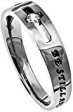
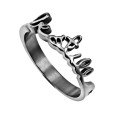
When Bonnie’s friend Barb showed her a ring she wears to remind her to “Be still,” Bonnie decided that was just the type of reminder she needed. She found a couple of rings that she liked at the Rejoice Christian bookstore in Mission Viejo, but when the sales clerks couldn’t help her decide on one of the two she liked, she bought both of them.

be-still-ring

A couple of days later, she was visiting with a friend who has been going through a rough patch. After praying with her, Bonnie showed her the rings she was wearing and offered to give her one of them. When she placed it on her friend’s ring finger, it was too tight — so tight that they had to use soap to get it off. Next, they put it on her pinky finger. It fit perfectly.

As they looked at the rings, “Bonnie exclaimed, “Wow! You’ve got God wrapped around your little finger.”

Think about that. As a child of God, you do indeed have God wrapped around your little finger. “See how very much our Father loves us, for he calls us his children, and that is what
we are!”
1 John 3:1 (NLT)

I love to spoil my grandchildren; each of them has me wrapped around their little finger. And yet, my spoiling is nothing compared to how God loves to spoil us. “So if you sinful people know how to give good gifts to your children, how much more will your heavenly Father give good gifts to those who ask him.” Matthew 7:11

 “God decided in advance to adopt us into his own family by bringing us to himself through Jesus Christ. This is what he wanted to do, and it gave him great pleasure.” Ephesians 1:5

It gave God great pleasure to adopt us into his family, and we surely wouldn’t want to spoil God’s pleasure by taking his love for granted. We show our gratitude when we praise him. “His presence within us is God’s guarantee that he really will give us all that he promised; … and that he guarantees to bring us to himself. This is just one more reason for us to praise our glorious God.”  Ephesians 1:14

 I must confess; there are far too many times when I forget to praise God from whom all blessings flow. Perhaps I need a pinky ring to remind me to be still and then praise the God who spoils me.

Unfortunately, I can’t snatch Bonnie’s second “Be still” ring. It ended up on the pinky of another lady who had been going through a very troubling week…!

hw_be_still_1

Verse for the week: Psalm 47:6
“Sing praises to God, sing praises; sing praises to our King, sing praises!”

Blessings,
Your Friends in Christ
“Take God Seriously – Not Yourself”

Dear Friends,

What would you say is a sin many Christians struggle with? Here’s a clue:

log-in-eye

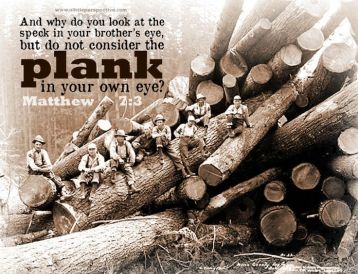
Jesus addressed the problem of judging others in Matthew 7:1-3 (NLT): “’Do not judge, or you too will be judged. For in the same way you judge others, you will be judged, and with the measure you use, it will be measured to you. Why do you look at the speck of sawdust in your brother’s eye and pay no attention to the plank in your own eye?’” I have always appreciated Colossians 3:13: “Make allowance for each other’s faults, and forgive anyone who offends you. Remember, the Lord forgave you, so you must forgive others.”

Does that mean we should be silent when we see another taking a wrong path? Are we being judgmental when we offer advice — criticize? What standard should we use to draw a line between judging, criticizing and instructing? The Scriptures suggest it depends on your starting point.

The Message Bible offers clarity: “… It’s quite simple: Do what is fair and just to your neighbor, be compassionate and loyal in your love, and don’t take yourself too seriously — take God seriously. ”Micah 6:8b (MSG)

Take God seriously, not yourself; that is the starting point. The standard should be what is right or wrong in God’s eyes, not what is right or wrong in our “I’s”: I think, I want, I need.

Starting out with God as our perfect guide, we can seek to judge by his standard. “Trust in the Lord with all your heart; do not depend on your own understanding. Seek his will in all you do, and he will show you which path to take.” Proverbs 3:5-6 (NLT)

But what if it is an offense that you can’t overlook? Jesus tells us, “If your brother or sister sins, go and point out their fault, just between the two of you. If they listen to you, you have won them over. But if they will not listen, take one or two others along, so that ‘every matter may be established by the testimony of two or three witnesses.’ If they still refuse to listen, tell it to the church; and if they refuse to listen even to the church, treat them as you would a pagan or a tax collector.” Matthew 18:15-17 (NIV)

Of course, there is a right and a wrong way to point out fault. The Book of Job offers several examples of how not to confront someone. Job’s friend Eliphaz’s caustic diatribe in Chapter 15 of the Book of Job is a virtual “how-not-to” on offering correction. You know from the opening sentences that Eliphaz missed the part about being compassionate — “A wise man wouldn’t answer with such empty talk! You are nothing but a windbag.”  It went downhill from there.

In his response to Eliphaz, Job gives us a clue as to what righteous criticism might have sounded like: “I could say the same things if you were in my place. I could spout off criticism and shake my head at you. But if it were me, I would encourage you.” Job 16:4-5 (NLT)

Even in criticism our goal should be to encourage the other as we seek unity and peace. “As a prisoner for the Lord, then, I urge you to live a life worthy of the calling you have received. Be completely humble and gentle; be patient, bearing with one another in love. Make every effort to keep the unity of the Spirit through the bond of peace.” Ephesians 4:1-3 (NIV)

Live at Peace
It’s in the Book; I know it’s true: to live in peace depends on you.
It took a while for me to see: the “you” involved is really me.
How often have I heard God’s word and misconstrued the things I’ve heard,
Ignored the plank that’s in my eye, and found faults in the other guy?
We’re all God’s kids, I’m sure you’ve heard. I know it’s true – it’s in God’s Word.
So, why is it we choose to act, ignoring that important fact?
A brother comes and needs a break; he asks for bread, he gets a snake.
He makes mistakes; we make him pay. That surely isn’t Jesus way.
If someone wrongs you, don’t keep score. You’ve slipped up too, of that I’m sure.
And God forgave you; now confess! It’s wrong to offer others less.
Lord, help us learn to offer grace. In us, let others see your face.
Inspired by your precious Son, we’ll live at peace with everyone.

Verse of the Week: “If it is possible, as far as it depends on you, live at peace with everyone.” Romans 12:18 (NIV) Blessings, Your Friends in Christ

“Pencils in the Hand … “

Dear Friends,

pencils-in-the-hand

Have you ever received a hurtful letter — one of those stinging epistles that makes you stay up at night? It may have been sent by a friend or a family member. Maybe a business associate or someone whose political views are different from yours just had to let off steam, and they took it out on you. Regardless of the circumstances, the pain you felt was real, and you struggled with how to respond.

Sometimes these types of correspondence are based on misinformation. The person was told or they perceived that you did or said something you didn’t. On occasion, you may have actually done something that was offensive or damaging, and they had the right to address the issue; but the tone they took was unkind and, to put it bluntly, unChristian.

Today, tweets and emails have replaced snail mail. Instant retaliation is too easy. Our first inclination may be to respond in kind, even though we know it’s better to respond kindly. We need to ignore the devil on our shoulder and tune in to that angel who may be encouraging us to remember the words of the sometimes hot-headed apostle. Peter, “Love each other as brothers and sisters. Be tenderhearted, and keep a humble attitude. Don’t repay evil for evil. Don’t retaliate with insults when people insult you. Instead, pay them back with a blessing. That is what God has called you to do, and he will grant you his blessing. 1 Peter 8b-9 (NLT)

In Proverbs, we find, “Don’t ever stop being kind and truthful. Let kindness and truth show in all you do. Write them down in your mind as if on a tablet.”
Proverbs 3:3 (ICB)

The Apostle Paul was thinking about things we say and do when he wrote in 2nd Corinthians 3:3 (NIV), “You show that you are a letter from Christ that he sent through us. This letter is not written with ink, but with the Spirit of the living God. It is not written on stone tablets. It is written on human hearts.”

mother-teresa

Mother Teresa (Saint Teresa of Calcutta) echoed the thought, “I am like a pencil in the hand of a writing God, who is sending a love letter to the world.”

We too are pencils in the hand of a writing God. We show our heart by how we communicate with others via mail, Twitter, Facebook, or face-to-face. What does your heart look like this week?

Verse of the Week

“Let the words of my mouth and the meditation of my heart be acceptable in Your sight, O Lord, my rock and my Redeemer.” Psalm 19:14 (NASB)

Blessings,
Your Friends in Christ